| NRB Unveils Digital Reforms: CBDC Framework and National ID Integration in Banking
Nepal Rastra Bank (NRB) has announced two key digital initiatives in its monetary policy for fiscal year 2082/83—advancing the Central Bank Digital Currency (CBDC) framework and integrating the national identity card system into the banking sector.
Governor Dr. Biswo Nath Paudel stated that a detailed study on electronic currency has been completed and is under discussion. The next step is to develop a structured CBDC framework to modernize Nepal’s monetary system. The policy also introduces a system where banks can access customer details directly through the national ID. Once updated at one bank, the information will be available to others via centralized infrastructure—enhancing efficiency, transparency, and reducing costs.
40% of Nepalis Use SIM Cards Registered Under Others’ Names: World Bank Report
A World Bank survey has revealed that 40% of Nepalis use SIM cards not registered in their own names. Conducted between July and September 2024 with 1,000 participants, the study found that such practices are common due to factors like second-hand phone usage and SIM distribution by others. This trend is also seen in countries like Morocco, Tanzania, and Jordan. The report highlights broader digital and financial inclusion gaps. In Nepal, only 280 out of 1,000 people engage in digital transactions, and 60% have bank accounts. While 58% of men use digital payments, only 36% of women do.
Kathmandu Aims to Become a Smart City with Tech-Driven, Inclusive Development
Kathmandu Metropolitan City (KMC) is set to transform into a technology-friendly and innovation-driven smart city. Announcing the policies and programs for fiscal year 2082/83, Mayor Balen Shah emphasized goals of inclusive governance, sustainable development, cultural preservation, and improved public services.
Key initiatives include establishing local vigilance units, launching an e-quotation and service rating system, and promoting timely service delivery. The city will also continue and refine programs like incubation centers, inclusive entrepreneurship grants, and cooperative reform. The metropolitan has endorsed NPR 25.76 billion for the coming fiscal year.
Government Tables IT and Cyber Security Bill to Replace Controversial Electronic Transactions Act
The Information Technology and Cyber Security Bill has been formally presented in the House of Representatives. Deputy Prime Minister and Finance Minister Bishnu Paudel, who also oversees the Ministry of Communications and Information Technology, introduced the bill on behalf of the government. Registered on June 10, the bill has now entered the theoretical discussion phase in parliament. The government aims to replace the widely criticized Electronic Transactions Act, particularly Section 47, which has drawn concern for its alleged misuse in curbing free expression.
While the bill aims to strengthen digital governance and cyber security, it contains several problematic and regressive provisions from a rights-based, innovation, and business perspective. In response, Digital Rights Nepal (DRN) is currently reviewing the bill and will soon publish a detailed policy brief analyzing its implications.
Public Bodies Mandated to adopt Electronic Payment from July 17
Starting July 17, 2025, all payments by public bodies must be made electronically, as directed by the Ministry of Finance. This move, aligned with the fiscal year 2082/83 budget commitment, aims to ensure full digitalization of government transactions. Although federal government bodies are already integrated into the electronic accounting and treasury system, the directive also targets boards, committees, and public institutions that have not fully adopted e-payment systems. Local governments connected to the ‘Sutra’ system are also expected to comply, under the oversight of the Office of the Auditor General.
Hacker Group ‘Kazu’ Claims to Leak Ministry of Education Data; Ministry Denies Breach
A hacker group named ‘Kazu’ has claimed to have breached the Ministry of Education’s website and posted 1.4 terabytes of data for sale on the dark web. Announced Monday night on a dark forum, the group set the price between $2,000 and $10,000 (approximately NPR 274,000 to 1.37 million), inviting interested buyers to contact them via Telegram, Signal, or Session. A separate Telegram channel link was also provided to showcase a sample of the data, which reportedly includes sensitive documents like ‘No Objection Letters’ (NOC) issued to thousands of students studying abroad, potentially containing personal details, passports, and certificates. However, the Ministry of Education has strongly denied the claims and confirmed that a formal investigation into the matter is underway.
DRN Activities
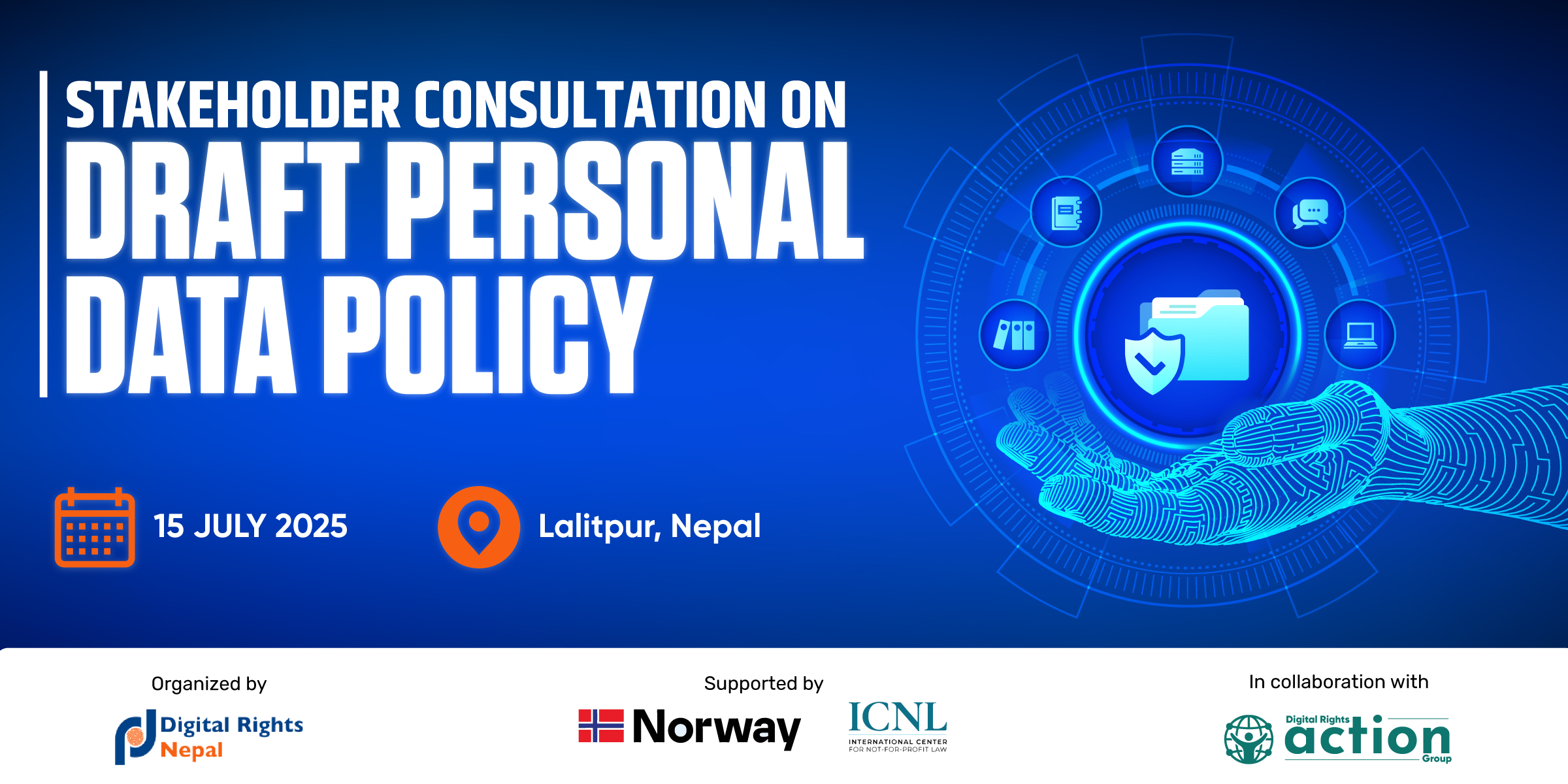
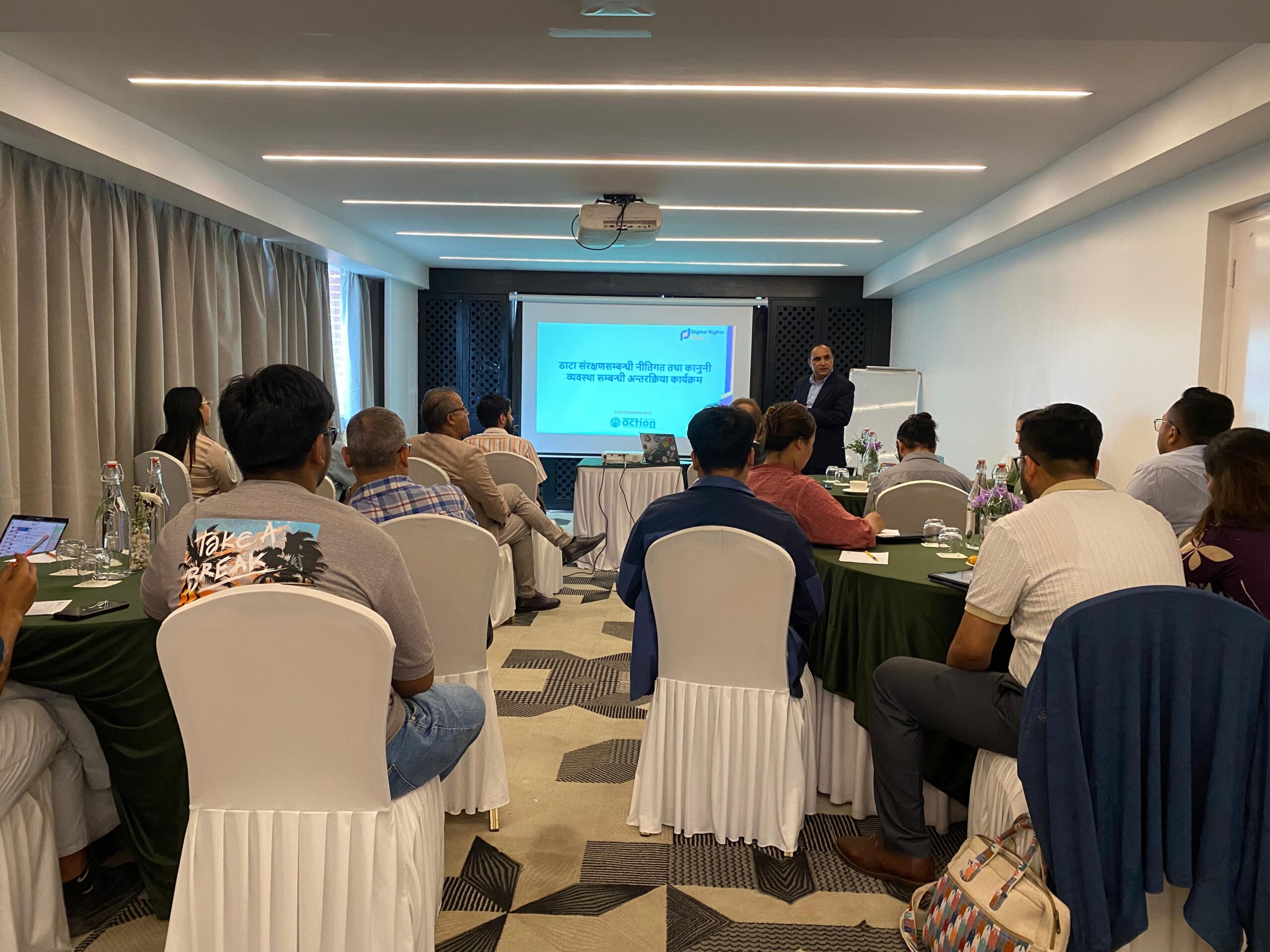
DRN Hosts Consultation on Draft Data Protection Policy
On July 15, Digital Rights Nepal (DRN), in collaboration with the Digital Rights Action Group (DRAG) and with support from the International Center for Not-for-Profit Law, organized a Stakeholder Consultation on the Draft Data Protection Policy published by the E-Governance Board. The event aimed to gather public suggestions and feedback on the proposed policy was attended by a diverse group of participants, including representatives from civil society, legal experts, journalists, private sector, and human rights defenders, and critically assessed the policy’s impact on privacy, digital rights, and governance.
We extend our sincere gratitude to all participants for their insightful contributions, which will be instrumental in advancing the data protection discourse and ensuring the policy is inclusive and responsive to the community’s concerns.
DRN Sponsored Optima MUN 2025 to Promote Youth Leadership
Digital Rights Nepal (DRN) was honored to serve as the Title Sponsor of Optima Model United Nations (MUN) 2025, held from July 12 to 14 in Kathmandu. This partnership represented more than a sponsorship; it embodied a shared commitment to empowering young individuals to actively participate in democratic discourse, advocate for digital freedoms, and uphold accountability in the digital era.
By supporting initiatives such as Optima MUN, DRN reinforces its dedication to cultivating youth leadership and raising awareness on critical issues including privacy, freedom of online expression, and digital justice. We extend our sincere appreciation to all the inspiring delegates whose engagement demonstrated that the future of digital rights rests in capable and conscientious hands. |